Tuesday, April 29, 2008

Native N.A. Plants in Landscape Designs


Leucothoe axillaris - Spring Foliage
Coastal Leucothoe


Hydrangea quercifolia - Emerging Leaves
Goosefoot / Oakleaf Hydrangea


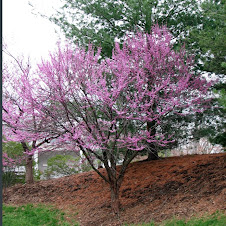
Cercis canadensis - Pine Background
Eastern RedBud

It is possible for gardeners in eastern N.A. to successfully plant and grow ornamental plants despite heavy populations of Virginia white-tail deer (Odocoileus virginianus).

Most of the deer-resistant shrubs and small trees that are useful in built landscapes are native to eastern N.A. Fortunately for gardeners these choices are easy-to-maintain and perfect choices for informal or natural appearing landscapes.

There is also a wide choice among deer-resistant spring-flowering bulbs and herbaceous plants. Some of these are native, while others are Asian or Mediterranean.

Plant lists presented in some of the articles below are derived from my own experiences and those of trusted horticultural professionals.

Caution: No plant is deer-proof! Hungry deer will browse and even destroy deer-resistant plantings when weather is severe or food sources are meager.
Appetites of white-tailed deer (Odocoileus virginianus) include ornamental landscape plants. Choosing native deer-resistant shrubs equals landscape success.
Eastern redbud trees and cultivars enrich landscape gardens with varieties of form, silhouettes and unusual seasonal color. Site selection is essential for good display.


Thursday, April 17, 2008

Spring Arrives in Eastern N.A.

Cercis canadensis 'Alba' - Springfield, MA
©Georgene A. Bramlage, June 2007

Here is a list of some of my spring articles and blogs - some current, some from previous years. They include my favorite trees like redbuds and witch hazel, annuals like petunias, perennials like the new breed of echinacea (cone flower), and spring-flowering bulbs.

Crabapple Trees in the Landscape
Eighteen kinds of crabapples form the backdrop to a Memorial Garden in a western MA orchard. Autumn crabapple display begins with warm sunny days and cold nights.

Eastern Redbud Trees in Landscapes
Eastern redbud trees and cultivars enrich landscape gardens with varieties of form, silhouettes and unusual seasonal color. Site selection is essential for good display.

Hamamelis: Best Landscape Sites
Choosing optimal site and microclimate for Hamamelis (witch hazel) planting locations facilitates growth and generates best spring and autumn performance.
Wave® Petunias in Built Landscapes: Growth Specifics, Care Requirement, and Garden Landscape Design Use
What are Wave® petunias? Wave® petunias solve garden landscape color and design needs. Growing and maintaining Wave® petunias is easy with no deadheading needed. Photos.
Wave® Petunias Design Solutions: Design and Complete One Weekend Projects
Wave® petunias provide inexpensive and eye-catching design solutions. Develop and complete a project in one weekend using these planning tips. Photos provided.
Wave® Petunia Landscape Designs: Garden Landscape Color and Design Solutions
Wave® petunias solve many garden landscape color and design problems. Plant them in containers or garden plots, alone or with other ornamental plants. Photos included.
Up-to-the-minute Echinacea Hybrids: Enhance Prairie Landscape and Meadow Garden Designs
Echinacea (coneflower) hybrids are up-to-the-minute plant breakthroughs. American plant breeders work to bring bright flower and plant color to landscape garden designs.
Echinacea Selections in Landscapes: New Cultivars Can Enhance Prairie and Meadow Gardens
Purple coneflower (Echinacea purpurea) selections and cultivars can enhance prairie and meadow gardens. These native N.A. plants tolerate some shade and moist soil.
Leap Day and Spring Flowers : February's End in Plant Growing Zone 7
Winter aconite (Eranthis hyemalis) and Crocus Tomasianus, reminders of Sissignhurst Gardens and Vita Sackville-West, surprise us here in Zone 7 at the end of February.
Spring Arrives in Plant Zone 7: Snowdrops and Winter Jasmine
Early spring in Virginia (USA) arrives with the blooming of snow drops (Galanthus nivalis) and winter jasmine (Jasminium nudiflorum).
Mini Flowering Bulbs Proclaim Spring!
Early spring bulb displays are important features at many National Trust (UK) properties. Many have early openings, beginning in February, to show off displays of snowdrops, aconites, crocuses and daffodils. Observing these displays shows gardeners new species and cultivar to try in their own garden

Tuesday, March 04, 2008

Spring in Plant Hardiness Zone 7

Here I am, for my first Spring time, nestled into the embrace of the Blue Ridge Mts., VA.
This has been, I am told, an exceptionally mild winter. But for someone who is escaping New England winters, I am certainly not complaining.

I first wrote about my transition in November (2007) in A Gardener's Soul: Growing Zone 5 to Zone 7. Moving from growing zone 5 in western MA to growing zone 7 in VA allows landscape gardening experimentation and realization of decades-old dreams of warm weather gardens.

Winter months quickly passed. We tallied up:
  • one small snow storm that left quickly melting snow,
  • an ice storm after which the ice also quickly melted, and
  • high winds which brought down utility lines causing power outages and forest fires.
Recent writings about spring in zone 7 include an entry for early February (2008):
  • Spring Arrives in Plant Zone 7. Early spring in Virginia (USA) arrives with the blooming of snow drops (Galanthus nivalis) and winter jasmine (Jasminium nudiflorum).
And another for last week - late February (2008):
  • Leap Day and Spring Flowers. Winter aconite (Eranthis hyemalis) and Crocus Tomasianus, reminders of Sissinghurst Gardens and Vita Sackville-West, surprise us here in Zone 7 at the end of February.

Tuesday, January 29, 2008

Landscapes of Love

Happy Valentine's Day

Love is patient and kind; love is not jealous or boastful; it is not arrogant or rude. Love does not insist on its own way; it is not irritable or resentful;
it does not rejoice at wrong, but rejoices in the right.
Love bears all things; believes all things; hopes all things; endures all things.


In honor of the great saint associated with love on February 14th, Landscapes of Love
presents
five historic landscapes that symbolize five extraordinary historic couples. Historic landscapes and landscape gardens usually chronicle the fashions and trends of the times that shaped them.

  • England -16th Century: Henry VIII, Anne Boleyn and Hever Castle

Hever Castle & Gardens
Hever
Nr Edenbridge
Kent TN8 7NG

Resource: Anne Boleyn: A New Life of England's Tragic Queen Joanna Denny (Da Capo Press, 2006)

Sissinghurst Castle Garden
Sissinghurst, nr Cranbrook
Kent
TN17 2AB

Resource: Victoria Glendinning Vita: A Biography of Vita Sackville-West (Alfred A. Knopf 1983) Adams National Historical Park
135 Adams Street
Quincy, MA 02169


Resources:
Bailyn, Bernard. First Generations: Women in Colonial America (New York: Hill and Wang, 1996)
Gelles, Edith B. Portia: The World of Abigail Adams. (Bloomington: University of Indiana Press, 1992)
  • France -18th Century: Marie Antoinette,Louis XVI and the Petit Trianon

Resource: History of the Petit Trianon


  • India - 17th Century: Mumtaz Mahal, the favorite wife of Shah Jahan, the fifth Mughal Emperor and the Taj Mahal built as a mausoleum and memorial.

Uttar Pradesh

Agra District

India


Monday, January 28, 2008

St. Francis of Asissi
Courtesy of Carruth Studios


What do Great Thinkers have to do with St. Francis of Asissi and saints for the garden?


It may be cold outside, but my fellow writers at Suite101 generate warmth with their writing. Tel Asiado (Great Thinkers topic) recently wrote two polls -Medieval Thinkers and 19th Century Scientists - which kept many of us on our toes. To vote, we needed one out of five possible choices. Some of us went on to justify and expand on our choices.

How do Great Thinker polls relate to St. Francis of Asissi and saints for the garden? I argued with Tel that Francis was a mystic and not a thinker; she rejoined with her definition of Francis as thinker.

He was one " who shaped intellectual life during the middle ages - philosophical, religious and political thoughts central to that point in time." And her final argument that got me to yield, "he brought monastic life to a new level of humility that hadn't existed before in thought, word and deed."

Ultimately, the discussion got around to St. Francis and garden statues. Tel, being an Australian, has never seen one. I'm a great fan of this monk, so friends seem to think I need statues of him!

Francis garden statues and Francis as the "patron saint of ecology" are relatively new. Earth Day and the ecology movement as we know it began in 1970, and earth people and gardeners probably latched on to Francis shortly afterwards. We utilized Francis mythology, springing up after his death with publication of Fioretti (The Little Flowers), a collection of legends and folklore about him.

Other saints for the garden have followed Francis: Isadore, Dorothy, Barbara, Elizabeth of Hungary, and Fiacre. The impetus for these garden patrons was probably the little paper booklet Saints in My Garden (about 1970) by Adelma Grenier Simmons, now deceased, founder of Caprilands Herb Farm nr. Danielson, CT.


Monday, January 14, 2008

Travel Time Again!


Traveling and visiting gardens is one of the delights of my life. It may just be January, but it is never too early for those of us with the traveling bug to begin our plans for this year's garden excursions. I've just made my reservations for a trip to Holland during tulip time. And I've begun my yearly review of gardens I visited last summer.

I share the first of these garden reviews in my article: Massachusetts Bridge of Flowers: Shelburne Falls Early 20th Century Trolley Bridge. This article received an Editors Choice Award for the week of January 14, 2008. The Editor's Choice Award exemplifies the quality content, excellent presentation, and high standards at Suite101.

Suite101
format allows only five photographs per article. So, I am posting a few more here:


Archway Enterance to Bridge of Flowers
Buckland Side of Deerfield River

Bridge Railings Buckland Side of Bridge

Purple-leaf Form of Cotinus coggygria
Late Afternoon Sunlight

Tuesday, January 08, 2008

New Plants for a New Year!


photo courtesy of IT Saul Plants
  • Hybrid Echinaceas and selections of Echinacea purpurea are among the most spectacular new plants for American landscape designs in 2008. I write about them in my latest articles at Landscaping@Suite101:
  1. Echinacea Selections in Landscapes: New Cultivars Can Enhance Prairie and Meadow Gardens, and
  2. Up-to-the-minue Echinacea Hybrids: Enhance Prairie Landscape and Meadow Garden Designs.
  • These new offerings, when seen in catalog photos, are a lot like eye-candy. Will they really work in your landscape garden design as well as their stalwart North American native ancestors like Echinacea purpurea? Only time will really tell. But meanwhile you might get some good ideas about evaluating and shopping for them at New Plants for the New Year.
  • I hope you enjoy the lovely photos that accompany this Blog entryas much as I did!


Echinacea 'Sunrise' and Echinacea 'Sunset'
photo courtesy of IT Saul Plants


Echinacea 'Harvest Moon'
photo courtesy of IT Saul Plants


Friday, November 30, 2007

Landscaping Blog @ Suite101.com

Crabapple Tree Diseases
Lead to Filthy and Dangerous Sidewalks


It's that time of year...some of us are still planting spring-blooming bulbs or looking forward to winter holiday decorations. However, right now, before the holiday festivities get underway in earnest, is the best time to look back at the 2007 growing season. And this is what I do in this week's Suite101 Landscaping article: Crabapple Tree Diseases.

I am certainly no plant pathologist and like most landscape gardeners would prefer to ignore plant diseases completely. Unfortunately, in this case, ignorance is not bliss! My Landscaping Blog @ Suite101.com
provides you, the reader, with a little bit of background about why I wrote the article.

Please vote in my current poll about Holiday Landscape Decorations underway on the Suite101 Landscaping Home Page. You'll need to scroll to the bottom of the page to reasd and vote in the poll. So far, the majority of voters say they don't decorate. So, please add your opinion. I plan to use this information on an upcoming article about holiday landscape decorations.

Have a great weekend!

Thursday, November 15, 2007

Landscape Maintenance Mistakes


Photo #1 - Damage done to pavements and front entrance because either a young tree was planted in the wrong location or a seedling was allowed to grow. Result is an unhealthy tree that needed to be cut and the expense of repair of hardscape.


Mistakes? Everyone makes one, now and then. However, Landscape Maintenance Mistakes...what I've begun to term Horticultural Horrors...abound in both residential and public landscapes.

The neatnik in me wants to scurry around and fix everything I see. No, I am not setting myself up as any Horticulturally Correct Person (HCP). I just delight in advocating for plant health. Usually, maintenance mistakes lead to poor plant health.

You can read more about some of these Horticultural Horrors, what causes them and the problems arising from them in my article: Landscape Maintenance Mistakes.


Photo #2 -Damage done to city pavement by a Gleditsia triacanthos var.inermis (thornless honey locust) because the roots have girdled themselves and have no place to grow. One of a row of these trees, all causing the same problem. Even though these honey locusts are generally a good choice for urban street trees, the problem arose because there was not enough space for the roots to grow. Research of the soil and space under the street might have prevented this damage.

Thursday, November 08, 2007

Poppies and Patriotism: Wildflower Seeds - Wild Flower Seed and Wildflower Seed Mixes - American Meadows


Poppies and Patriotism Symbolize the Red of Sacrifice

Earlier this week. I recalled just how important the upcoming November 11 holiday is when I attended an elementary school Veterans' Day concert put on by first grade students.

Many readers like myself, school-age during the 1930s and 40s, learned that the 11th hour of the 11th day of the 11th month marked the temporary cessation of hostilities between the Allied nations and Germany at the turn of the 20th century. We were very used to seeing veterans selling paper poppies to mark Armistice Day. In 1954, President Dwight D. Eisenhower declared November 11 as Veterans' Day. Veterans groups still sell red paper poppies and have carried over the tradition to Memorial Day in May.

What do poppies and patriotism have to do with landscaping? The corn poppy or Flanders poppy (Papaver rhoeas) can be an important part of wildflower meadows or early summer annual planting beds. Now is a good time to start thinking about and planning for growing season - 2008 before the oncoming Thanksgiving and December holidays.

Below are some synopses of Suite101 Landscaping blogs and articles about growing and using poppies in garden landscapes:

Here is a copy of "In Flanders Fields" written by Canadian military doctor Colonel John McCrae in 1915 who used the imagery of red poppies (Papaver rhoeas) in landscapes of "The Great War."

When William Shakespeare (1564-1616) wrote about "all the idle weeds that grow...in our sustaining corn," he had in mind wheat, barley, and oat fields of medieval England.

Flanders field poppies (Papaver rhoeas) brighten European landscapes in early summer. Here in the U.S., they symbolize Veterans' Day (autumn) and Memorial Day, originally called Decoration Day (spring).

"Poppies and Landscapes of War" elicited a note from an old friend of mine that is shared here. He comments about poppies and the Memorial Day parade in his town.

Sweeping landscape plantings of the corn (Flanders's Field) poppy and its cousins are a knockout. These plants are true annuals though they may live for several seasons.

Government and private groups work to bring color to highway and commercial landscapes. Annual poppies add flair and dazzle to large wildflower plantings.

Early temperate season uniform poppy beds require planning and design to focus attention on residential and commercial landscapes. Presented is a planting sequence for Zone 5.

Annual poppies bring unity to wildflower meadows or a natural garden as well as create a breath-taking display. Seeds of annual poppies are easy to find and buy.
Seaside and sheltered landscape plantings and herb gardens present some down-to-earth examples for using annual poppies in natural-appearing gardens.


Friday, November 02, 2007

A Zone 7 Gardener's Soul Trapped in a Weak Zone 5 Gardener's Body


I grew up and learned about plants, horticulture and landscaping in OH - definitely a Plant Growing Zone 5. I've lived in western MA for about four decades and more and more have claimed that I have a zone 7 soul trapped in a weak zone 5 gardener's body. Now, I will have a chance to prove it. Earlier this week, my husband and I moved into a condominium cottage nestled in the shadow of the Blue Ridge Mountains.

The move is not year 'round, but only for five winter months. We've become "snow-birds." Besides being fun and educational for me, the move means many more experiences to share with my readers. We've entered the land of contrasts:


  • Japanese yews (Taxus cuspidata) and arborvitae (Thuja occidentalis) replace boxwood (Buxus sempervirens) and crepe myrtle (Lagerstroemia indica) in the cultivated landscape.
  • The traditional and somewhat down-to-earth landscapes of the New York – New England regions replace those originating from Williamsburg and Jeffersonian-style sophistication.
  • Winter weather in the Blue Ridge area is more moderate than that in western MA, and there is little snow and ice. This allows me much planting leeway to indulge my zone 7 soul. The ground is still warm and the location deer-proof enough for me to plant and enjoy tulips. I can luxuriate in new cultivars of hydrangea (Hydrangea macrophylla) and Encore Azaleas®.
  • Instead of a garden almost one-acre in size, I have a small area suited for condominium-style living. The whole concept of landscape gardening is scaled down in such a physical setting.
And finally, I look forward to a glorious spring. Our general location is right where the northern and southern Blue Ridge Mountains meet - a location where populations of northern and southern eastern North American native plants merge into one large population. Here is another opportunity to realize a decades-old dream of pursuing plants I have only seen in specialized collections or fieldguide illustrations.

Stay tuned to read about all sorts of new and exciting discoveries.

Monday, October 08, 2007

Do Woolly Worms really forecast winter's length in the northeast U.S.? It is anyone's guess!


I spend a lot of my autumn garden days in dreaming and observing what is around me than I do gardening. One of my favorite pursuits is to watch wooly worms - wooly bears, black-ended bears, banded woolly bears - inch their way about the garden landscape.

Folklore has it that these critters can predict the coming winter weather. And here is how we are suppose to forecast the coming months. Look for those woolly bears that are black at each end with a reddish brown band in the middle. The size of the brown band is suppose to be an indicator of winter's severity - the narrower the band, the harsher the winter. If woolly worms are browner than black, and the middle band tends toward orange that indicates the winter will be mild.

The woolly worm is really the (caterpillar) larval stage of the Isabella tiger moth (Pyrrhactia isabella). Unfortunately for us lovers of folklore, folks at the West Virginia University Extension Service and other scientists say there is no scientific evidence that woolly worms predict the weather. Variations in worm bands are linked to differences in species and larval stage, not the weather.

We can still enjoy these critters despite their scientific rap. The folks in Lewisburg, PA and elsewhere annually celebrate at the woolly worm. This year, the Woolly Worm Festival in Lewisburg is on Saturday, October 13 from 9am to 5pm.

You can also read more about Wooly Bears, their reputations and celebratory activities at All About Worms: Articles About Woolly Bears.

Happy Autumn and Happy Daydreaming!

Friday, October 05, 2007

Garden Art and Artifacts: Regional Juried Fine Arts and Designer Craft Shows

Fountain - Sculpture Garden - Paradise City Arts Festival
May 2007

I'm captivated by regional arts and crafts shows. It seems as if each seasonal change brings another arts show or crafts fair to attend. Although I can't go to as many as I'd like, nor spend as much money as I'd like (!), I do manage to visit several each year.

I'm fortunate to have some friends who enjoy these shows as much as I do. Yes, we go to look at beautiful objects, eat great food and visit with other like-minded friends. However, I'm always on the look-out for items that might make my landscape garden inviting and distinctive.

I've learned over the years, by trial-and-error, where the good shows are located and how to comfortably enjoy the shows. I share some hints in Garden Art and Artifacts: Regional Juried Fine Arts and Designer Craft Shows.

This article is the beginning of a new series that features art in the garden. I've gathered a lot of information aver the years, but I'll add articles sporadically so as to not overwhelm anyone.

I'm always receptive to comments and ideas...thanks for reading!

Tuesday, September 25, 2007

Landscape Garden Color

Autumn arrived this week. Look Out! Here come the autumn colors in temperate North America.


Seasonal Color Inspiration: Autumn by COLOURlovers is a great web site to begin an investigation of why leaves turn color in the autumn. And because COLOURlovers™ is a resource that monitors and influences color trends, one of it sections includes color palettes. It's also a great web location to see how the colors of autumn mix and match.

Fom knowing a little about leaf color change and color inspiration, it is not too much of a leap for landscape gardeners to ask, How can I use color more effectively in my landscapes?

My Suite101 article for this week begins a series about using Color in the Landscape Garden. The series will also include photos I've collected over the years.

Landscape Garden Color: Planned Design Generates Unified Appearance discusses how a few guiding principles are necessary for successful use of color in the garden landscape. This article outlines the three primary colors:
  • red,
  • yellow, and
  • blue.

The article also points out the importance and enjoyment of using a colorwheel and what significance primary colors traditionally play in daily life. Future articles will discuss plants that fit into a primary color scheme. Tints and tones, shades and hues will also be discussed in future articles along with plants that fit suggested descriptions and themes.

Tuesday, September 18, 2007

Colonial Homes and Revival Gardens

My fascination with the development of The House of Seven Gables Historic Neighborhood by Caroline O. Emmerton and Joseph E. Chandler continues.

Colonial Homes and Revival Gardens: The House of The Seven Gables Historic Neighborhood, my most recent article about this development, discusses
  • Preservation and Restoration
  • Garden Designs, and
  • Gardens and Selected Houses.

Tuesday, September 04, 2007

Endangered Species Program, U.S. Fish & Wildlife Service

This has nothing to do with horticulture. However, I respect Dr. Goodall and I like the black-footed ferret!

Dr. Jane Goodall Visits:
The Endangered Species Black-footed Ferret Conservation Center near Ft. Collins, Colorado.
August 31, 2007
Endangered Species Program, U.S. Fish & Wildlife Service

Friday, August 31, 2007

Pioneers of American Landscape Design


A University of VA (Charlottesville) Pavillion Garden
Inspired by Thomas Jefferson's original designs


Pioneers of American Landscape Design (2000) is a book you need to know about and own if you are at all interested in garden history and preserving cultural and garden landscapes. It is one I turn to often to check on the background of the gardens and landscape creators about which I write.

This book is a project of the
  • Natioanl Park Service Landscape Initiative
  • Library of American Landscape History
  • CATALOG of Landscape Records in the United States at Wave Hill (NY) and
  • Cultural Landscape Foundation.
According to the Cultural Landscape Foundation, The Pioneers of American Landscape Design project (and book) documents the lives and careers of people who have shaped the American landscape—not only landscape architects, but all who have played a role in creating our landscape heritage, including landscape gardeners, architects, horticulturists, nursery owners, writers, engineers, educators, cemetery designers, planners, golf course architects, and naturalists.

Although new copies (when one can find one) of Pioneers of American Landscape come with a hefty price tag, gently used copies are available through Internet book sites and independent book sellers. A copy is well worth having on your own reference book shelf.

Here are some articles about what else is on my Landscape Gardening Reference Book:

©
Text and photographs by Georgene A. Bramlage. 2007. Reproduction without permission
prohibited.

Thursday, August 30, 2007

A Williamsburg Perspective on Colonial Gardens

A Williamsburg Perspective on Colonial Gardens
is an article on the Colonial Williamsburg website. I return often for a "refresher course" and a good look at Colonial Revival and Colonial Restoration attitudes and ideas for Historic Garden Landscapes.

If, like me, you are intrigued with the how and why of historic garden landscapes, I strongly encourage you to investigate Williamsburg's 62nd Colonial Williamsburg Garden Symposium: Celebrating the American Garden.The symposium will be held May 4 – 7, 2008. Keynote speaker is Lynden Miller, director of The Conservatory Garden in New York’s Central Park.

The speaker roster for these symposia is always full of interesting "garden people" who being unique perspectives to gardens and garden design. What I like best about the symposium, when I have the opportunity to attend, is the freedom to have time to really look at the Colonial Williamsburg gardens and many times to explore "behind the scenes" with museum gardeners and interpreters.

As gardeners in northern temperate zones begin to put gardens to bed for the off-season, it's also time to start thinking about learning opportunities in 2008.

Thursday, August 23, 2007

Gardener's Holiday - House of 7 Gables - Salem, MA


The House of the Seven Gables
Viewed across the raised beds of a Colonial Revival Garden.


Nathaniel Hawthorne's Birthplace
Moved to the complex from another part of Salem.


Retire Becket House (now the Gift Shop)
Viewed across the raised beds of a Colonial Revival Garden
Moved to the complex from another part of Salem.

What does a gardener do for a holiday? Easy answer: Gather up friends and relations, and visit a garden. I am fortunate enough to live in New England where it is very easy to find great-looking and historical gardens within a short drive or a long walk.

Earlier this week, accompanied by two friends I visited
The House of the Seven Gables Historic District that contains gardens that represent four centuries of planting schemes. This is another way of saying, to my way of thinking, Colonial Revival. During the early 1900s, Colonial Revival reached its peak of popularity in both house interior design and renovation along with landscape gardening. This approach clothed history in nostalgia and the concept of "the good old days."

Many times, the fun of a garden visit for me is in unraveling the garden's past - kind of like a mystery - rather than just looking at all the pretty flowers. The schoolteacher in me likes to look for accuracy in garden interpretation, while the photographer in me is always busy looking for that "perfect shot." The houses within the House the Seven Gables complex are not interpreted as being authentic representation, nor are the gardens. So, all in all, it was a great relaxing day out for me!


In The House of the Seven Gables: A Colonial Revival Garden (Salem, MA) I write about some of the information I uncovered about The House of the Seven Gables, its Historic Neighborhood, and Colonial Revival Gardens.


***Most gardens maintain web sites so, if you want to visit the House of the Seven Gables, I heartily recommend accessing these or telephoning for up-to-the-minute open days, admission times, and fees or other pertinent information you need to make your visit a good one.

The House of the Seven Gables Association. Location and Headquarters • 115 Derby StreetSalem, MA 01970 • (978) 744-099.

©
Text and photographs by Georgene A. Bramlage. 2007. Reproduction without permission
prohibited.


Monday, August 20, 2007

August Sunflowers in Poland

August Sunflowers in Poland: North American native flowers glow in fields and market stalls.
Sunflowers, North American natives, brighten Polish garden plots and yards. Eight planting and design tips ensure sunflower success in any temperate climate.


I recently returned from a two-week vacation of cultural exploration mostly through the rural roads of Poland. Twenty-seven of us, organized by The Polish Center of Discovery and Learning at Elms College, Chicopee (MA), traveled from Warsaw through Sandomierz, Tarnow, and Zakopane to Krakow.We saw farmers and their families putting-up hay, weeding vegetable fields as well as small plots and gardens of sunflowers.

Read more at August Sunflowers in Poland

©
Text and photographs by Georgene A. Bramlage. 2007. Reproduction without permission
prohibited.